Office Space Trends in the Manufacturing Industry
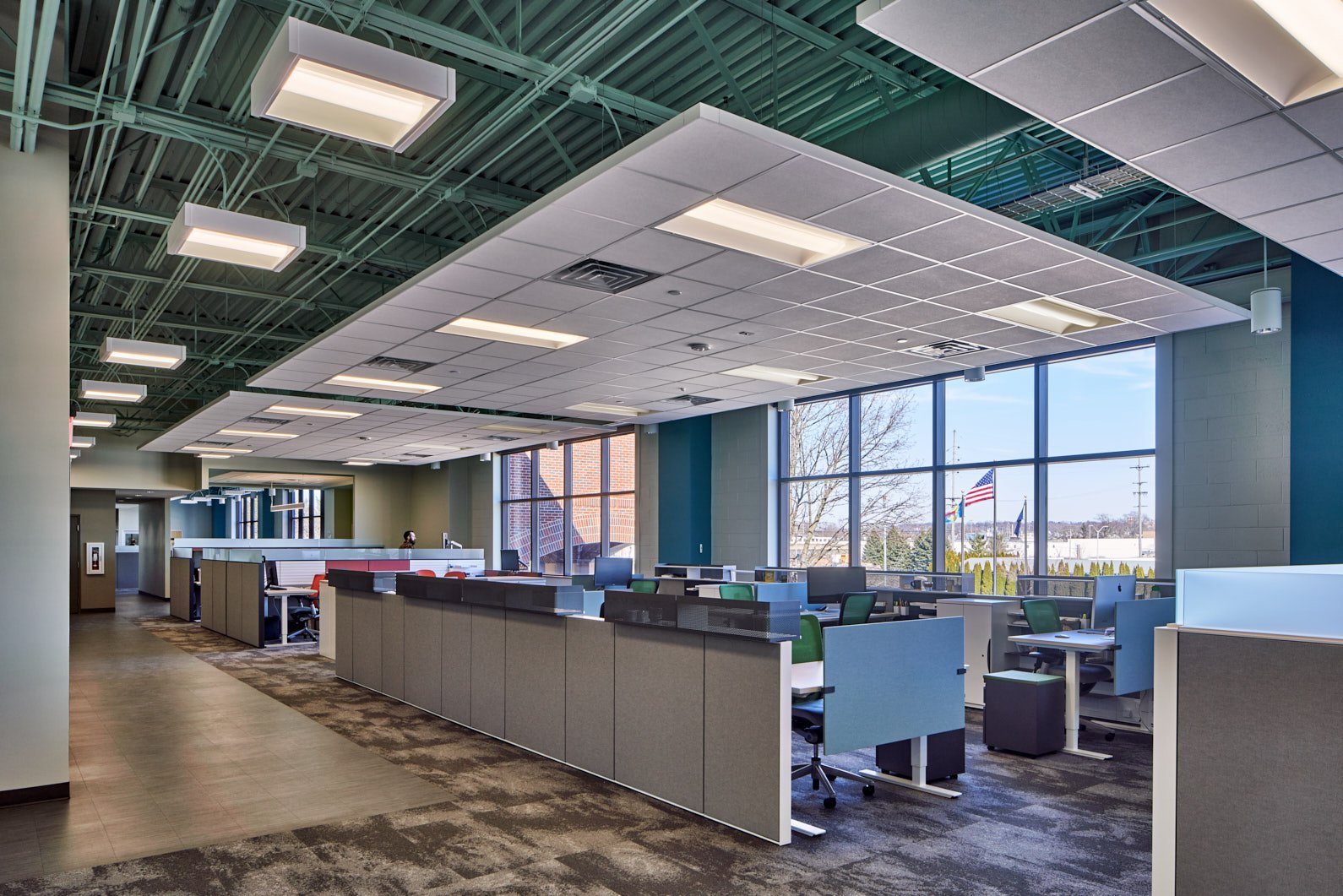
Picture your work environment. Is it comfortable and filled with natural light? Is your technology up to date? Do you often talk to coworkers in other departments? If you work in a traditional manufacturing plant office, this probably isn’t your experience.
Modernizing the office and other administrative spaces throughout your plant may not be in your future-state plan. However, creating a functional, welcoming workplace for employees can boost collaboration and productivity, maximize usable space, and raise morale. Here are the most impactful improvements your plant can make today. As always, if you’re seeking feedback on your specific plant, please reach out.
1. Open Layout
Traditional plant offices are often segmented into smaller rooms or constricted by tall dividers that block natural light. While enclosed offices are ideal for private meetings and uninterrupted work, this layout encourages operational silos and inhibits cross-team collaboration.
Most traditional offices can be improved by simply removing some of the interior walls and creating an open-concept workspace. This change will increase staff encounters throughout the day, leading to greater community amongst employees and a decreased sense of hierarchy between different office groups and managers. You’ll also create more usable space.
“When you switch from doing closed offices to an open office environment, you're actually able to increase the amount of people in that space by 30 percent,” explains interior designer Chloe Aalsburg, NCIDQ, IIDA, in a recent podcast on office space design.
With that additional space, you can introduce more work spaces and collaborative zones. Team members can gather to discuss a difficult project, cross paths with company leadership, or get to know coworkers at the coffee bar. The flexible floor plan allows you to position specific departments and personnel closer together, reducing time-consuming email exchanges and increasing business process efficiency.
“When you switch from doing closed offices to an open office environment, you’re actually able to increase the amount of people in that space by 30 percent”
2. Durable Materials & Furniture
Traditional office environments are often poorly designed for remote or hybrid work models, which require a variety of flexible, technology-rich workspaces. In a modern manufacturing office, you’ll find:
Sit-to-stand workstations with docking stations that any employee can plug into.
Open, lounge-style areas where employees can cast their computer screens onto a large monitor and brainstorm together.
Enclosed conference rooms of different sizes for private calls or meetings. These spaces are shared and used as needed.
All these spaces are fully integrated with the technology necessary to turn an impromptu encounter into a highly productive meeting.
In addition, C2AE always recommends materials that are easy to clean and durable, whether we’re designing an office in a manufacturing plant, public building, school, or hospital. This will reduce your long-term operations and maintenance costs.
While updating your materials and furniture, consider incorporating company branding into your workplace through color selections, signage, and materials. Your brand is the collection of ideas, language, and visuals that communicate your company’s value to the world. Consistently reinforcing your brand throughout the office can increase employee satisfaction and support sales efforts.
3. Efficient Infrastructure
A key aspect of modernizing office spaces in the manufacturing industry involves upgrading the underlying infrastructure to support both current operations and future growth. As manufacturers adapt to new technologies and working models, it’s crucial to have robust, scalable systems in place.
One focus of recent modernization efforts has improved air quality equipment. Companies are more focused than ever on renovating and replacing old HVAC systems with energy-efficient systems to ensure their employees have clean and comfortable air within their office spaces. Modern HVAC systems are designed with energy efficiency in mind, reducing both environmental impact and operational costs.
Advanced air sanitation systems are becoming more common as air quality in the workplace continues to be a trending topic. Manufacturers are investing in technologies like UV-C light filtration, HEPA filters, and bipolar ionization. These systems remove airborne contaminants and help mitigate the spread of illnesses, creating a healthier work environment.
4. A Change Management Plan
A change in your office layout can be an emotional time for employees. That’s why C2AE prioritizes change management from the initial programming to the final implementation of office improvement projects.
During the programming phase of your project, we engage with your team[JB1] to gather a clear picture of each team’s ideal workflow. This sets your project up for meaningful, effective improvements and ensures your team knows they are an integral part of these changes. During the design and implementation phases of your project, we continue to discuss changes with everyone involved, asking for input on furniture selections, functionality and layout options.
The purpose of change management is to communicate to your team why the office is changing, allow them to share their opinions through planned activities and address their concerns as much as possible. This process improves buy-in, comfort, and effectiveness.
5. A Master Plan
C2AE always considers future growth during the planning process, ensuring that current designs accommodate potential expansions on the existing property. We not only look at your current operations but also consider your future-state goals when designing office and administrative environments. This approach allows your company to grow within your existing space without needing immediate future renovations.
An investment in a well-designed, renovated office space is an investment in the long-term future of your company. A modern office or administrative space can increase employee happiness and company camaraderie, leading to greater employee retention. A renovated, employee-friendly office can spur company productivity while enabling future growth.
Looking for more information on designing your entire plant to support your retention efforts? Read our article, “Designing Manufacturing Plants for Employee Retention.”