Accessible Design for Historic Renovations
“The Congress finds that…individuals with disabilities continually encounter various forms of discrimination, including outright intentional exclusion, the discriminatory effects of architectural, transportation, and communication barriers, overprotective rules and policies, [and] failure to make modifications to existing facilities and practices.”
- Americans with Disabilities Act of 1990
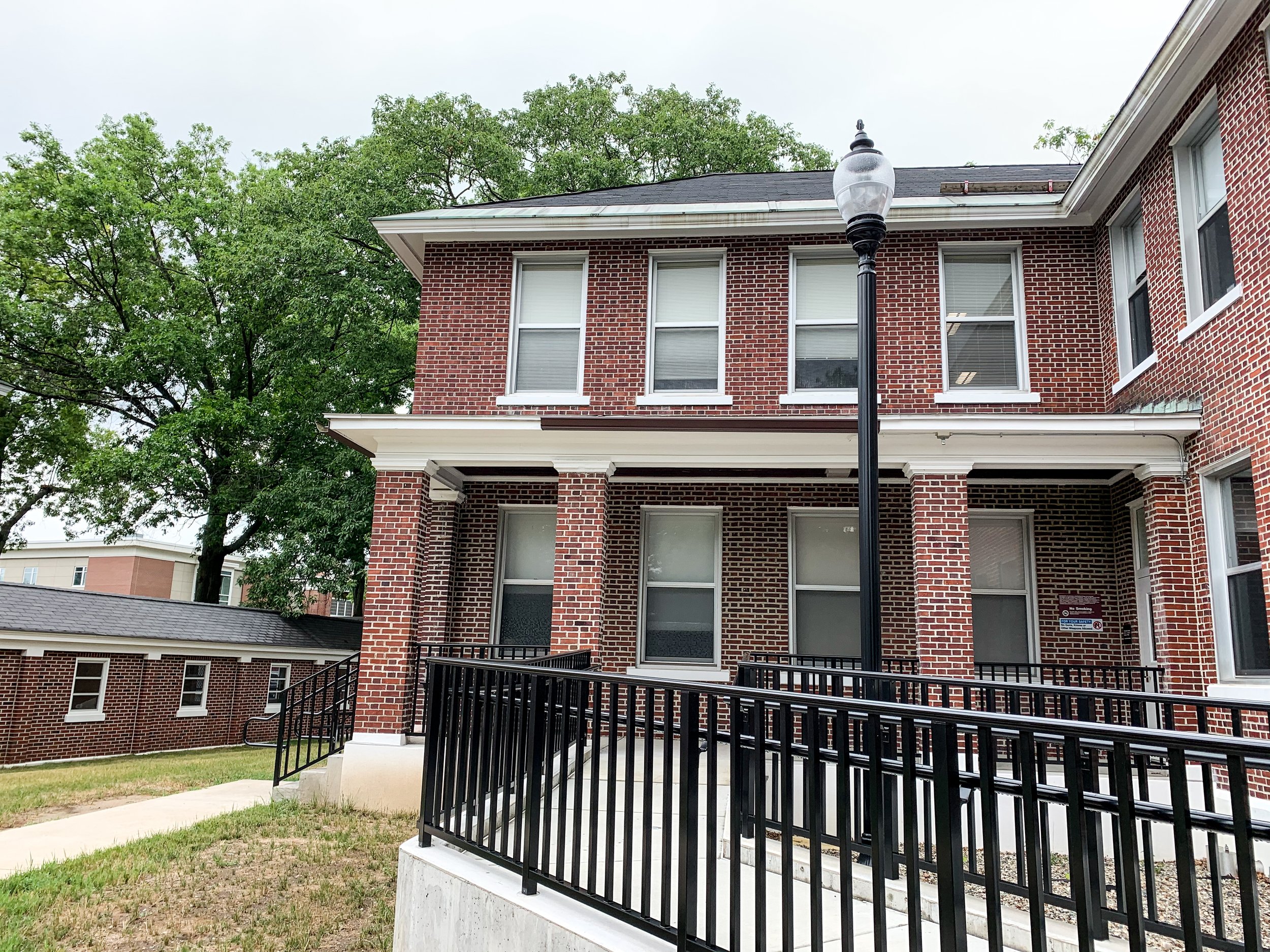
34 years ago, the Americans with Disabilities Act (ADA) became law, literally and figuratively opening doors for millions of Americans. However, public buildings are designed to last five decades or more, meaning most libraries, schools, and offices standing today predate ADA requirements.
We are now in a transition period. With few exceptions, when a historic building undergoes a renovation, it must meet ADA requirements. In those instances, striking the right balance between historic preservation and ADA compliance is challenging but essential. Building owners have both a legal and moral responsibility to create inclusive spaces.
As an architect with decades of experience renovating historic buildings, I am passionate about finding creative solutions to this challenge. Based on my experience, here are a few important considerations when updating historic buildings for ADA compliance.
1. Matching Motifs
Picture your state capital building. From the exterior, you might see a wide stairway leading through tall columns to an arching entrance. Inside, you may find detailed woodwork, crystal chandeliers, and ornate murals. Historic buildings like these are undeniably grand and, for that reason, difficult to modify.
Adding a modern ramp and railing next to a craftsman staircase would appear jarring. Instead, you could custom-build accessible elements that match your building’s bespoke masonry and woodwork. This solution would be wildly expensive, so for highly ornate spaces, I like to use a simpler, more contemporary take on the classic motif. With attention to detail, we can design something similar enough to match your building’s character without breaking the bank.
Sometimes hiding accessible amenities, perhaps in a covered porch or behind landscaping, can be a solution. That said, we never want to make access hard to find. Rather, this approach is more focused on turning accessible amenities into attractive architectural features that we don’t want to hide.
2. Preserving Space
A common challenge in updating historic buildings is spatial constraints. Unlike modern buildings with flexible and open-concept interiors, historic buildings tend to have smaller rooms that each serve a unique purpose. Long-established public buildings are also often landlocked because bustling community centers have been constructed around them over the years.
Because of these spatial constraints, adding accessible amenities can be difficult. However, without taking too much space, it’s possible to add platform lifts, install handrails, and widen doorways. Other touches may take up virtually no additional space, such as tactile paving, level floors, and enhanced signage with braille and high-contrast coloring.
If it isn’t possible to fit essential ramps, elevators, and stair lifts within the existing space, it may also be necessary to change the building and site. If this is a difficult decision, remember that a quarter of the U.S. population is living with a disability, and meeting their needs is well worth a renovation. After all, as the owner of a public building, your first mission is to create a space where all citizens are welcome—from families with strollers to people who can only walk on level ground to people in wheelchairs.
3. Structural Updates
Although popular architecture from each decade has a unique look and feel, modern materials don’t seem quite so out of place in buildings constructed after World War II. Therefore, adding accessible amenities to early contemporary buildings is more about structural constraints than matching aesthetics.
Many buildings constructed after the 1950s have too many steps, inaccessible thresholds, and sunken floors without ramps or elevators. Sidewalks from this period weren’t designed to be flush. While some accommodations, like ramped entrances, were introduced during this period, bathrooms typically weren’t accessible until ADA law mandated it much later.
When updating early contemporary buildings, it's important to ensure access beyond the building entrance and first level, as this may have been the only thing the original designers considered. Common concerns include adding more room around doors, creating space to have assistance in restrooms, and focusing on access not just for people in wheelchairs but for people of all abilities.
4. Building Today
While modern designs aren’t always perfectly accessible, one of the best ways architects can create inclusive spaces is to engage with community members throughout the entire design process. Receiving input from a variety of users will ensure the finished product is a truly welcoming space. Check out this blog to learn more about creating effective community surveys.
Thoughtfully updating buildings from different architectural eras for accessibility is not just a legal requirement but an ethical obligation. Our built environment reflects our values, and by prioritizing accessibility, we demonstrate our commitment to inclusivity and equality for all members of society.